Designing for life-critical decisions: UX for predictive lung simulation
As a UX Designer at Daylight Design, I worked on Ebenbuild with a strong focus on prototyping complex workflows. Alongside this, I supported research, concept development, and close collaboration with clinicians and scientists.
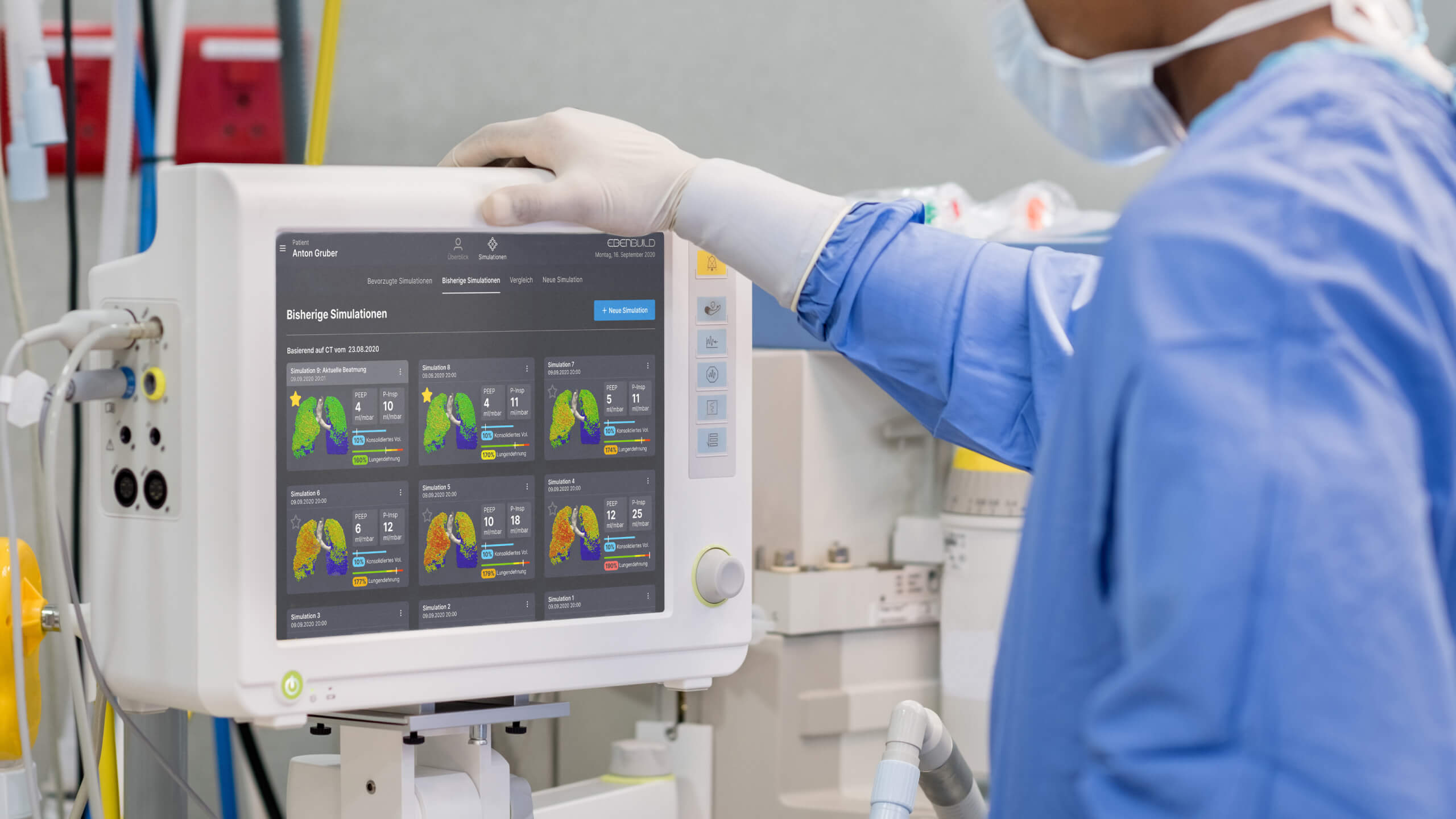
Ebenbuild develops patient-specific lung simulations - digital twins that help clinicians, nurses, and researchers understand how air, pressure, and oxygen behave inside the lungs.
The platform focuses on acute respiratory distress syndrome (ARDS), a life-threatening condition where fluid-filled lungs struggle to get enough oxygen into the bloodstream. During COVID-19, ARDS became a daily reality in intensive care units, making ventilation decisions both critical and risky.
"Radically new technology such as ours is toothless if no one wants to use it and very few can already imagine its possibilities. Daylight has made these possibilities remarkably tangible and has already sparked people's imagination." — Dr. Kei W. Müller, Co-Founder and CEO, Ebenbuild
Designing a digital twin of the lung comes with very real consequences.
If oxygen levels are set too low, the body doesn't get enough oxygen.
If they're set too high, the lungs can be damaged by oxygen toxicity.
Too much pressure can overstretch fragile lung tissue and cause lasting injury.
These risks are well understood in intensive care, but translating them into software is hard.
High-risk settings: The same controls that help save lives can also cause harm if misunderstood.
Delayed effects: Damage may only appear hours, days, or weeks later.
No room for confusion: Even expert users need to clearly understand what a setting does before trusting the outcome.
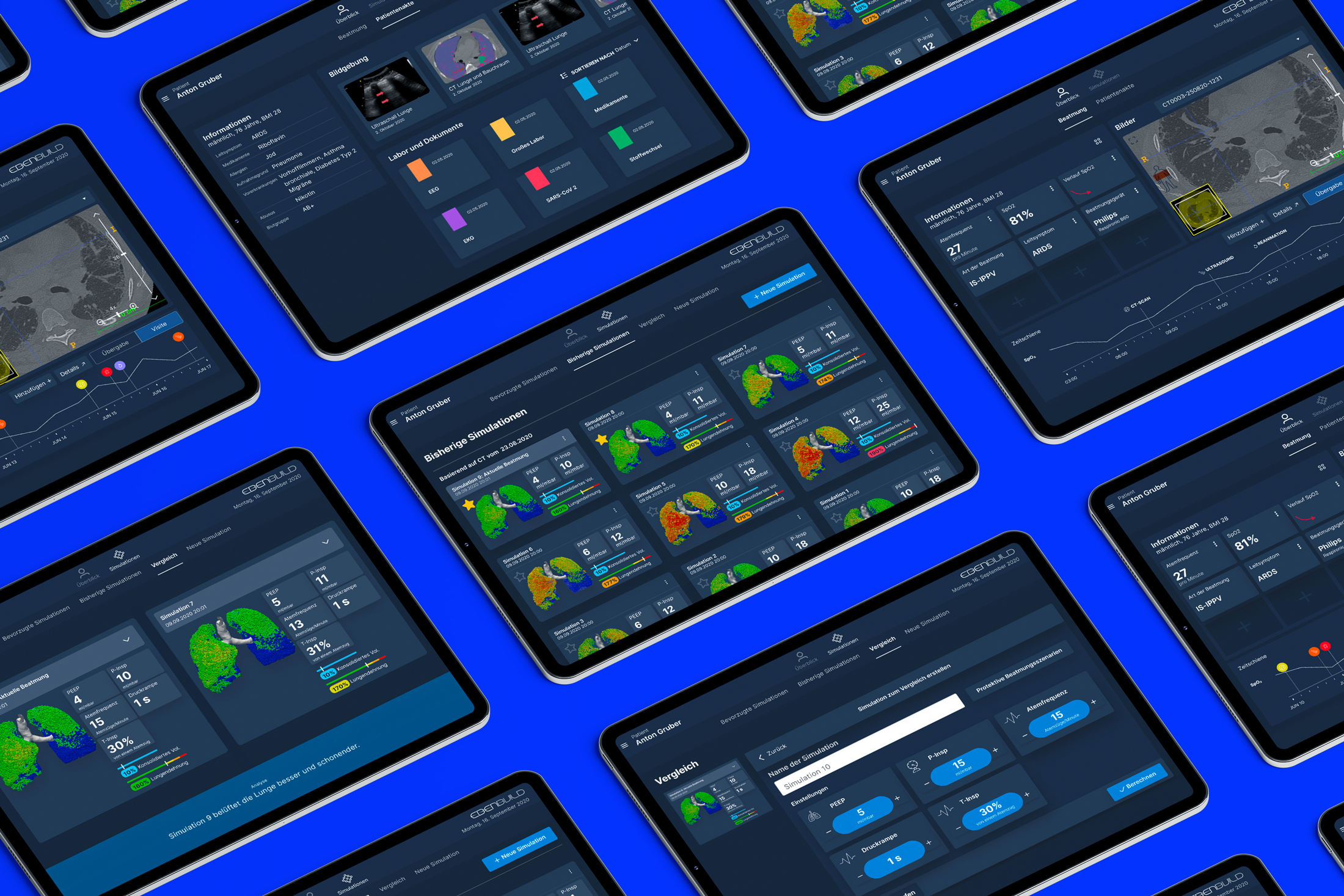
Prototyping to reveal risk: Prototypes were used to explore how users interpret ventilation settings and to surface misunderstandings early.
Making cause and effect clearer: The interface focused on helping users understand what would likely happen to the lungs when a value changes, not just showing numbers.
Supporting safe exploration: Clear structure, sensible defaults, and contextual cues helped reduce accidental misuse without restricting expert freedom.
Close clinical collaboration: Continuous feedback from clinicians ensured the design reflected real ICU thinking and decision-making.
This approach helped reduce uncertainty in a high-stakes medical context and supported better alignment between clinical intent and software behavior.
What I learned: In medical software, UX decisions directly affect safety and trust. Clear language and structure are part of patient protection.
What I'd do differently: I would explore more ways to show long-term impact earlier, helping users better understand how small decisions can affect lung health over time.